

-
Description
-
About Nabucco
-
Cast
-
Mihály Kálmándy
-
András Palerdi
-
Riccardo Gatto
-
Csilla Boross
-
Szilvia Vörös
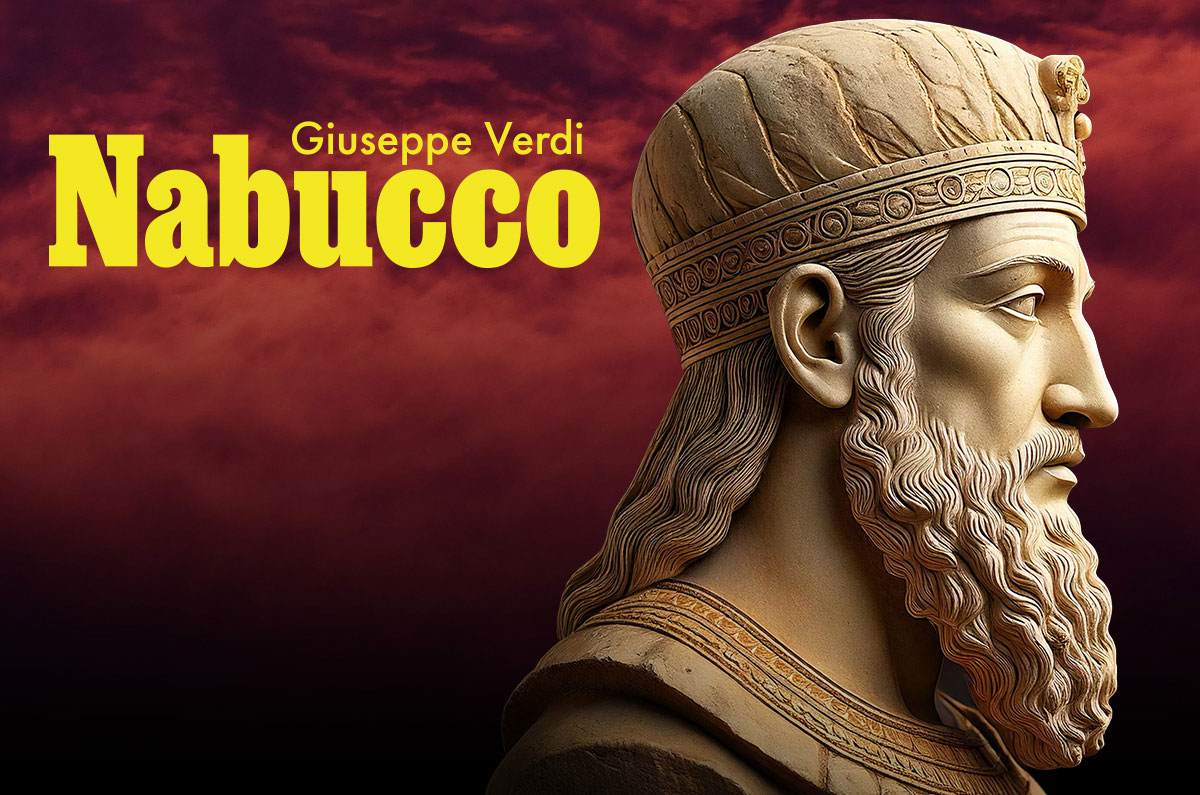
NABUCCO
opera
in Italian with English and Hungarian subtitles
August 15. 2026, Saturday, 8:00 PM
(rain date: august 16)
Margaret Island Open-Air Stage
Running time: 180 minutes (with 1 intermission)
Featuring: the Kodály Philharmonic Orchestra and the Kodály Choir Debrecen
Conductor: István Dénes
Director, producer: Teodóra Bán
Verdi’s Nabucco Returns to Margaret Island
Following one of the greatest audience successes of the 2025 season, Verdi’s monumental opera Nabucco returns to the stage of the Margaret Island Theatre in summer 2026. With its powerful music, biblical grandeur and exceptional cast, the production promises another unforgettable operatic experience.
Kálmándy Mihály, Kossuth Prize-winning baritone and permanent member of the Society of Immortals, returns in the title role of Nabucco. The role has played a defining part in his career: he made his debut as Nabucco while still a student at the Gheorghe Dima Music Academy in Cluj-Napoca, before launching his international career with a production of Verdi’s masterpiece at Teatro Verdi Trieste. Since then, he has appeared on many of the world’s most prestigious opera stages.
Boross Csilla returns as Abigaille, reaching a remarkable milestone in 2026: she will perform Verdi’s legendary heroine for the 150th time. Her international career was launched by the role in 2011 in Rome, under the baton of Riccardo Muti. Since then, she has portrayed Abigaille on some of the world’s leading opera stages, captivating audiences with her extraordinary vocal power and compelling stage presence.
The role of Zaccaria, the High Priest of the Hebrews, will once again be performed by András Palerdi, whose commanding bass and exceptional expressive depth lend profound dignity to this embodiment of faith and hope.
Szilvia Vörös makes her debut at the Margaret Island Theatre as Fenena. The acclaimed mezzo-soprano brings her warm, velvety voice and sensitive stage presence to the role of Nabucco’s daughter, whose character offers a lyrical and deeply human counterpoint to the opera’s world of power, conflict and faith.
Riccardo Gatto also returns to Margaret Island as Ismaele, following his acclaimed appearance in last year’s production. The Venice-born tenor once again takes on the role of the nephew of the King of Jerusalem.
Verdi’s timeless masterpiece, last season’s celebrated artists and exciting new encounters – Nabucco returns in summer 2026 as one of the highlights of the Margaret Island Theatre’s opera season.
At the age of twenty-seven, Verdi decided he would never write another opera. He was at a professional and personal low point. In this seemingly hopeless situation, he was only willing to read the libretto at the urging of his agent, and then he created an opera that changed his life and united his country.
The unquenchable love for freedom and loyalty to the nation are most memorably displayed in the chorus of the Hebrew slaves in the history of music: following the example of the Jewish people, Giuseppe Verdi's music truly became a beacon for the nations. The thought with golden wings from Psalm 137 travels through time and arrives in the 19th century and beyond, from ancient Israel, from Babylon to Europe.
By the spring of 1842, all of Milan was humming "Va, pensiero...". The opera was soon performed in the most important opera houses on the continent and was also presented in America. The Hungarian premiere took place in January 1847 at the National Theatre.
Nabucco, King of Babylon: Mihály Kálmándy
Ismaele, nephew of the King of Jerusalem: Riccardo Gatto
Zaccaria, High Priest of the Hebrews: András Palerdi
Abigaille, slave woman, Nabucco’s eldest daughter: Csilla Boross
Fenena, Nabucco’s daughter: Szilvia Vörös
High Priest of Baal: Boldizsár Zajkás
Anna, sister of Zaccaria: Ágnes Kristófi
Abdallo, officer of the Babylonian king: Gergely Ujvári
Featuring:
Kodály Philharmonic Orchestra Debrecen
Kodály Choir Debrecen
(Chorus Director: Zoltán Kocsis-Holper)
Conductor: István Dénes
Set Designer: Nóra Árva
Lighting Designer: Ákos Bodor
Assistant Director: Attila Toronykői
Director & Producer: Teodóra Bán
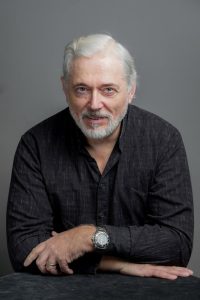 Mihály Kálmándy – Nabucco, King of Babylon
Mihály Kálmándy, Kossuth Prize-winning baritone, is one of the most distinguished figures of Hungarian opera, whose name has become inseparable from the great baritone roles of the Verdi repertoire. A permanent member and Master Artist of the Hungarian State Opera, he has enjoyed a remarkable career spanning more than three decades, captivating audiences in Hungary and on some of the world’s most prestigious opera stages.
Kálmándy graduated from the Gheorghe Dima Music Academy in Cluj-Napoca in 1985, where he made his debut in the title role of Verdi’s Nabucco. This role has accompanied him throughout his entire artistic journey and became the foundation of his international career. His breakthrough came with the Nabucco production at the Teatro Verdi in Trieste, which opened the door to numerous international engagements.
Throughout his career, Mihály Kálmándy has appeared in many of Europe’s important opera centres and beyond. He has performed in Rome, Naples, Vienna, Stockholm, London, Warsaw, Seoul and New Zealand, while remaining one of the leading artists of the Hungarian State Opera, where he has portrayed the great baritone roles of the operatic repertoire. He has collaborated with internationally renowned conductors including Esa-Pekka Salonen, Kent Nagano, Pier Giorgio Morandi and Pinchas Steinberg, and has shared the stage with celebrated artists such as Plácido Domingo, José Cura, Éva Marton, Edita Gruberová and Erika Miklósa.
Verdi’s characters have always held a central place in his artistic career. In addition to Nabucco, his celebrated interpretations include Rigoletto (Rigoletto), Macbeth (Macbeth), Count Luna (Il trovatore), Amonasro (Aida), Renato (Un ballo in maschera) and Rodrigo, Marquis of Posa (Don Carlo). His powerful yet nuanced voice, exceptional dramatic instinct and commanding stage presence have made these portrayals memorable milestones of Hungarian opera.
His outstanding artistic achievements have been recognised with numerous prestigious awards, including the Melis György Prize, the Závodszky Zoltán Prize and the title of Chamber Singer of the Hungarian State Opera. He became a member of the Society of Immortals in 2015, received the Kossuth Prize in 2019, and was named a Master Artist and Permanent Member of the Hungarian State Opera.
The role of Nabucco occupies a truly exceptional place in Mihály Kálmándy’s artistic legacy. The transformation of the proud Babylonian king—from a powerful ruler consumed by ambition into a humbled man who discovers faith and humanity—requires extraordinary vocal strength, dramatic depth and profound emotional understanding. Kálmándy’s interpretation reveals both the monumental grandeur of the king and the vulnerability of the human being behind the crown.
For audiences of the Margaret Island Open-Air Theatre, Mihály Kálmándy is a familiar and beloved artist. He has appeared on the island’s stage on numerous occasions in major opera productions, including Il trovatore, Rigoletto, Aida, Bánk bán, Otello and Tosca. In the 2025 season’s highly successful production of Nabucco, he returned to the title role—marking a remarkable artistic anniversary, as forty years earlier he had made his debut in the same role. The production returns in 2026, once again offering audiences the opportunity to experience his legendary interpretation of Verdi’s Babylonian king.
Audiences can therefore look forward to witnessing an artist who represents the highest traditions of Hungarian opera: a true Verdi interpreter whose Nabucco is at once a majestic ruler, a tragic human figure and an unforgettable operatic presence.
 András Palerdi – Zaccaria
András Palerdi is one of Hungary’s most distinguished bass singers, whose powerful voice, noble stage presence and exceptional musical intelligence have made him a leading figure of Hungarian and international opera. For more than three decades, he has been celebrated for his interpretations of the great bass roles of the operatic repertoire, from Mozart and Verdi to Wagner and contemporary works.
Palerdi began his musical studies at the Franz Liszt Academy of Music in Budapest, continued his training in the United States at the University of Southern Mississippi, and later completed his opera studies at the Vienna Academy of Music. His international career began at the Vienna State Opera, where he joined the company as a young artist and had the opportunity to work alongside some of the greatest names of the operatic world. This early experience at one of Europe’s most prestigious opera houses became a defining foundation for his artistic development.
His international career has taken him to important opera stages and concert halls across Europe and beyond. In the United States, he achieved success in several prestigious vocal competitions and performed with Opera Colorado, while his concert appearances include performances at Carnegie Hall in New York, where he sang major works from the sacred repertoire. In 2018, he participated in the Hungarian State Opera’s New York guest performances at the David H. Koch Theater, portraying the title role in Bartók’s Bluebeard’s Castle and Cipolla in János Vajda’s Mario and the Magician.
As a leading bass of the Hungarian State Opera, András Palerdi has portrayed many of the greatest roles written for his voice type. His repertoire includes Sarastro (The Magic Flute), King Philip II (Don Carlo), Méphistophélès (Faust), Gurnemanz (Parsifal), Daland (The Flying Dutchman), Bluebeard (Bluebeard’s Castle) and many other demanding characters. His performances are distinguished by the combination of vocal authority, refined musical expression and a deep understanding of the dramatic world of each role.
His outstanding artistic achievements have been recognized with numerous prestigious honours. He was named Chamber Singer of the Hungarian State Opera in the 2016/2017 season, received the Hungarian Gold Cross of Merit in 2018, and was awarded the György Melis Prize in 2022. These distinctions acknowledge his exceptional contribution to Hungarian opera and his decades-long artistic career.
In Verdi’s Nabucco, the role of Zaccaria, the High Priest of the Hebrews, is one of the most powerful and meaningful bass roles in the entire opera repertoire. Zaccaria represents faith, wisdom and hope in a world torn apart by conflict. His monumental arias require not only vocal grandeur but also spiritual depth and commanding stage presence.
András Palerdi’s interpretation reveals every aspect of this extraordinary character: the authority of the religious leader, the compassion of the human being and the unwavering strength of belief. His rich, resonant bass and dignified stage presence make Zaccaria one of the emotional centers of the production.
For audiences of the Margaret Island Open-Air Theatre, András Palerdi is a familiar and highly respected artist who has appeared on the island’s stage on several occasions in major opera productions. Following the great success of the 2025 production of Nabucco, he returns as Zaccaria, once again bringing his experience, artistry and profound understanding of Verdi’s music to one of the composer’s most inspiring works.
Audiences can look forward to an unforgettable portrayal by an artist who represents the highest traditions of Hungarian bass singing—an interpreter whose Zaccaria embodies strength, dignity and the timeless power of faith.
 Riccardo Gatto – Ismaele
Riccardo Gatto is an Italian lyric tenor whose elegant vocal style, refined musicianship and passionate stage presence have established him as a notable interpreter of the Italian operatic tradition. His artistry is characterised by a natural sense of phrasing, a warm and expressive timbre, and a deep understanding of the stylistic world of bel canto and the great Italian composers.
Born in Venice, Riccardo Gatto completed his musical studies at the Conservatorio Benedetto Marcello in Venice, before continuing his vocal training with renowned masters, including Antonio Lemmo and the legendary Spanish tenor Giacomo Aragall. His artistic development has been shaped by a profound connection to the Italian vocal tradition, allowing him to approach both lyrical and dramatic repertoire with elegance and authenticity.
His talent was recognised through success at several prestigious international singing competitions. He received awards at competitions including the Silvano Pagliuca International Singing Competition, the Martinelli–Pertile International Singing Competition, the Etta Limiti Competition and the Riccardo Zandonai International Singing Competition, and was a finalist in important vocal competitions such as Spiros Argiris, Ottavio Ziino and Toti dal Monte. These achievements opened the way to an international career on opera stages in Italy and abroad.
Riccardo Gatto’s repertoire reflects the breadth and richness of the Italian tenor tradition. His roles include Ferrando (Così fan tutte), Count Almaviva (Il barbiere di Siviglia), Nemorino (L’elisir d’amore), Alfredo Germont (La traviata), Roméo (Roméo et Juliette), Cassio (Otello), Mario Cavaradossi (Tosca) and the Duke of Mantua (Rigoletto). He has performed in numerous Italian opera houses, including theatres in Padua, Treviso, Modena, Piacenza, Bergamo and other important opera centres, as well as appearing internationally in Europe and beyond.
In Verdi’s Nabucco, the role of Ismaele, nephew of the King of Jerusalem, requires a rare balance of lyrical beauty, emotional sincerity and dramatic sensitivity. Although surrounded by the monumental conflicts of kings, nations and faiths, Ismaele represents the deeply human dimension of the opera: love, loyalty and personal courage. His choices become a crucial element in the unfolding drama, placing him at the heart of the story’s emotional tensions.
Riccardo Gatto’s interpretation brings together the qualities that define his artistry: elegant Italian phrasing, expressive vocal colour and a natural stage presence. He portrays Ismaele as a noble and sensitive young man, revealing both his inner conflict and his devotion with sincerity and musical refinement.
The audience of the Margaret Island Open-Air Theatre first experienced Riccardo Gatto’s portrayal of Ismaele in the highly successful 2025 production of Nabucco. His elegant performance, authentic Italian style and outstanding vocal qualities contributed greatly to the success of the production, which became one of the memorable opera events of the season.
Following this acclaimed appearance, Riccardo Gatto returns to Margaret Island to once again embody Ismaele. His return offers audiences the opportunity to experience a true Italian tenor voice, bringing freshness, passion and the beauty of the Verdi tradition to one of the composer’s most beloved masterpieces.
 Csilla Boross – Abigél
Csilla Boross is one of Hungary’s most internationally acclaimed dramatic sopranos, whose powerful voice, extraordinary stage presence and profound musicality have made her a sought-after interpreter of the great dramatic roles of the opera repertoire. Her career has taken her to some of the world’s leading opera houses, where she has earned recognition for her passionate performances and exceptional vocal artistry.
A graduate of the Franz Liszt Academy of Music in Budapest, Csilla Boross began her international career after winning several prestigious competitions and quickly established herself as one of the most exciting voices of her generation. Her artistry has been recognized with numerous awards, including the prestigious Thália Award in the Czech Republic for her outstanding interpretation of the title role in Puccini’s Madama Butterfly. She has also received the Diva Award of the National Theatre Brno and the Green Room Award in Australia, while in Hungary she was honored with the Knight’s Cross of the Order of Merit of Hungary for her exceptional contribution to Hungarian and international opera.
Her international career has brought her to many renowned stages, including the Teatro dell’Opera di Roma, Grand Théâtre de Genève, Opéra de Lyon, Opéra de Marseille, Teatro Regio di Torino, Teatro Massimo di Palermo, Opera Philadelphia, Washington National Opera, the Shanghai Grand Theatre and the Hungarian State Opera. She has worked with leading conductors and artistic teams around the world, bringing her distinctive dramatic intensity and vocal brilliance to the great soprano roles of the repertoire.
The dramatic soprano repertoire has always been at the heart of Csilla Boross’s artistic identity. Her interpretations of roles such as Abigél (Nabucco), Tosca (Tosca), Madame Butterfly (Madama Butterfly), Lady Macbeth (Macbeth), Amelia (Un ballo in Maschera) and Leonora (Il Trovatore) have established her as one of the outstanding performers of the Verdi and Puccini traditions. Her voice combines extraordinary power with emotional depth, allowing her to reveal both the grandeur and the humanity of the characters she portrays.
Verdi’s Abigél in Nabucco is one of the most demanding and thrilling roles in the dramatic soprano repertoire. The character’s journey—from an ambitious woman driven by anger and the desire for power to a figure confronted with love, suffering and redemption—requires exceptional vocal strength, dramatic range and psychological insight. Csilla Boross has performed this role more than 150 times internationally, making Abigél one of the defining characters of her career and one of the roles most closely associated with her name.
Her interpretation of Abigél is distinguished by its extraordinary intensity, fearless vocal expression and deep emotional commitment. She brings to the role not only the overwhelming power required by Verdi’s writing, but also the inner conflicts and human vulnerability hidden behind the character’s determination.
For audiences of the Margaret Island Open-Air Theatre, Csilla Boross represents the very best of the international Verdi tradition. Her return as Abigél offers a rare opportunity to experience one of today’s most celebrated interpreters of this demanding role—a performer whose artistry transforms Verdi’s music into a powerful and unforgettable theatrical experience.
 Szilvia Vörös – Fenena
Szilvia Vörös is one of the most distinguished Hungarian mezzo-sopranos of her generation, whose exceptional musical sensitivity, warm-toned voice and refined stage presence have earned her international recognition. As an artist of remarkable versatility, she has successfully combined the rich traditions of Hungarian opera with a flourishing international career on some of Europe’s most prestigious stages.
Szilvia Vörös began her musical studies in Hungary and continued her education at the Franz Liszt Academy of Music in Budapest, where she studied under the guidance of the legendary Hungarian soprano Éva Marton. Her exceptional talent was recognised early in her career: in 2008 she won the 6th József Simándy National Singing Competition, and in 2014 she became the winner of the inaugural Éva Marton International Singing Competition, one of the most prestigious vocal competitions founded in Hungary. These achievements marked the beginning of her international career.
She became a prominent artist of the Hungarian State Opera, where she has performed a wide range of major mezzo-soprano roles. Her repertoire includes Fenena (Nabucco), Suzuki (Madama Butterfly), Bersi (Andrea Chénier), Siebel (Faust), Isabella (L’italiana in Algeri), Waltraute (Die Walküre) and Judith in Bartók’s Bluebeard’s Castle. Her interpretations are characterised by musical refinement, emotional depth and a rare ability to reveal the inner world of the characters she portrays.
Her international career reached an important milestone when she became a participant in the Young Singers Project of the Salzburg Festival in 2016. In 2018, she made her debut at the Vienna State Opera, one of the world’s most prestigious opera houses, where she has since performed a number of important roles, including Fenena in Verdi’s Nabucco. Her appearances in Vienna have established her as one of the notable Hungarian artists of her generation on the international opera scene.
Beyond the opera stage, Szilvia Vörös is also a highly accomplished concert performer, appearing regularly in oratorio productions and recitals. Her artistry is characterised by exceptional musical intelligence, elegant phrasing and a deep connection with the emotional content of the music. Whether performing intimate lyrical works or dramatic operatic scenes, she brings a rare combination of precision, warmth and expressive power.
In Verdi’s Nabucco, the role of Fenena, daughter of the Babylonian king, represents one of the opera’s most human and touching characters. Unlike the world of ambition and power surrounding her, Fenena embodies compassion, love and forgiveness. Her journey from a princess caught between opposing worlds to a figure of faith and sacrifice provides one of the opera’s most moving emotional threads.
Szilvia Vörös brings exceptional sensitivity to this role, highlighting Fenena’s inner strength, dignity and humanity. Her rich mezzo-soprano voice and nuanced interpretation reveal the character’s vulnerability as well as her courage, creating a deeply moving presence within Verdi’s monumental drama.
For audiences of the Margaret Island Open-Air Theatre, Szilvia Vörös offers the opportunity to experience an artist who represents the finest traditions of Hungarian vocal excellence while also enjoying international acclaim. Her Fenena provides a graceful and heartfelt counterpoint to the powerful conflicts of Nabucco, reminding audiences of the enduring themes of love, faith and reconciliation at the heart of Verdi’s masterpiece.

